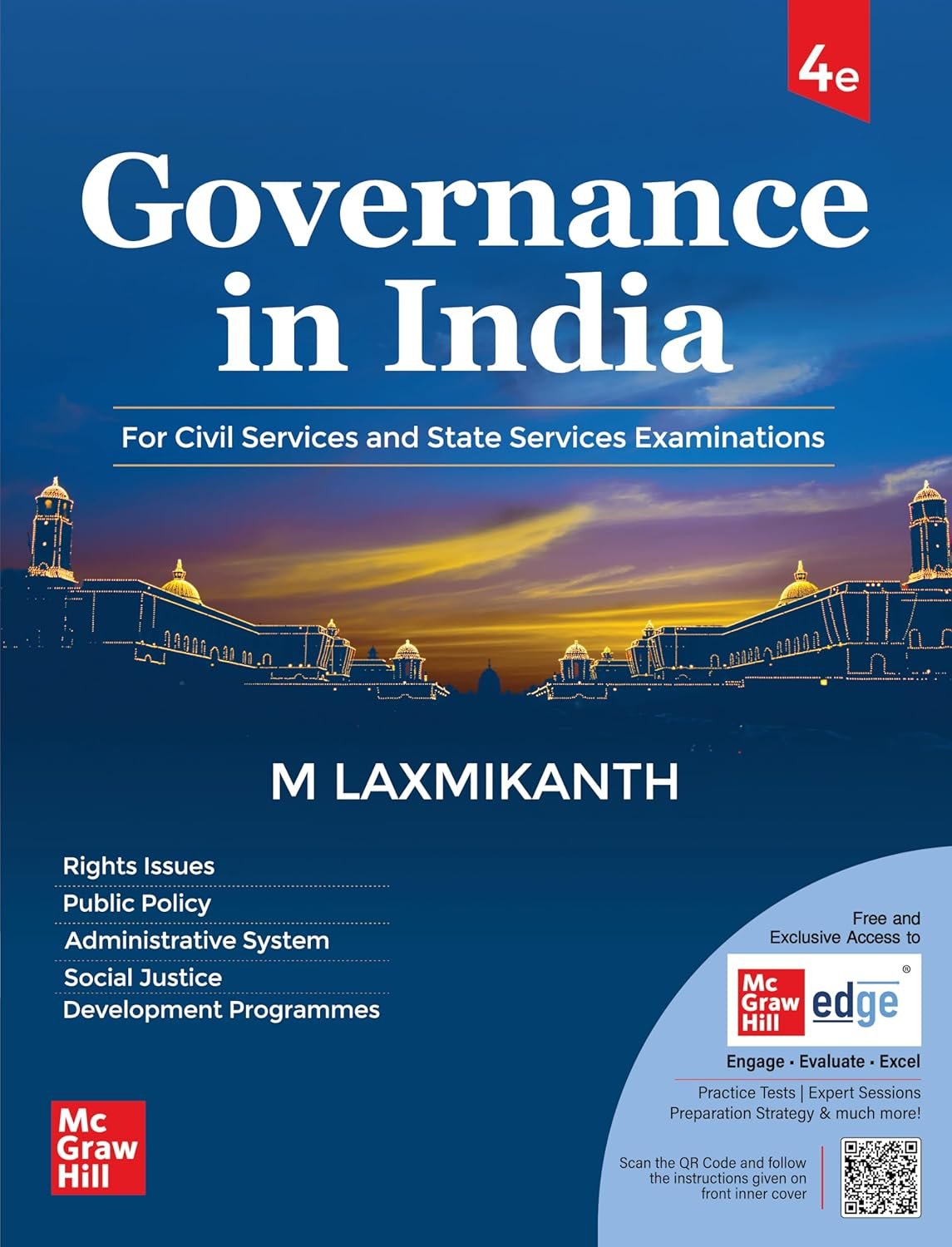
Governance in India 4th Edition Book PDF by M. Laxmikanth 2026 : In the journey of Civil Services preparation, understanding governance is as important as mastering polity, economy, or history. Governance is not just about how a government functions; it is about how effectively power is exercised to deliver justice, welfare, and development.
One of the most trusted and widely used books in this domain is “Governance in India” by M. Laxmikanth, published by McGraw Hill. This book has become a standard reference for UPSC and State Civil Services aspirants who want a clear, structured, and exam-oriented understanding of governance issues in India.
About the Author – M. Laxmikanth
M. Laxmikanth is a household name among UPSC aspirants. His books on Indian Polity and Governance are considered foundational texts. What makes his writing special is:
-
Simple and lucid language
-
Strict alignment with UPSC syllabus
-
Focus on conceptual clarity
-
Practical orientation for answer writing
With Governance in India, Laxmikanth extends his expertise to the evolving and dynamic field of governance and public administration.
Why Governance is Crucial for Civil Services Exams
Governance plays a central role in:
-
UPSC GS Paper 2 (Governance, Constitution, Polity, Social Justice)
-
Essay Paper
-
Interview/Personality Test
-
State PCS Mains
Topics like transparency, accountability, citizen charter, e-governance, social justice, and development programmes are frequently asked in both Prelims and Mains.
A strong grip on governance concepts helps aspirants:
-
Write analytical answers
-
Provide real-life examples
-
Present solutions to administrative problems
-
Showcase maturity in interviews
What This Book Covers
The book is carefully designed to meet the exact needs of competitive exams. Major themes include:
1. Rights Issues
The book explains how governance is deeply connected with human rights, RTI, grievance redressal mechanisms, and citizen empowerment. These chapters help aspirants understand the rights-based approach in administration.
2. Public Policy
A detailed discussion on how policies are formulated, implemented, and evaluated. It covers:
-
Policy-making institutions
-
Role of stakeholders
-
Evidence-based governance
-
Challenges in policy execution
3. Administrative System
This section provides insights into:
-
Civil services reforms
-
Performance management
-
Accountability mechanisms
-
Ethics in public administration
4. Social Justice
Governance cannot be effective without inclusiveness. The book covers issues like:
-
Welfare schemes
-
Poverty alleviation
-
Gender justice
-
Marginalized communities
5. Development Programmes
Aspirants get a clear understanding of flagship schemes, implementation bottlenecks, and the role of governance in achieving sustainable development.
Key Features of the Book
✔ Syllabus-Oriented Content
Every chapter is mapped with UPSC and State PCS syllabus, ensuring no irrelevant information.
✔ Simple and Structured Language
Even complex governance concepts are explained in an easy-to-understand style, making it ideal for beginners.
✔ Use of Real Examples
The book includes contemporary examples of government initiatives, reforms, and best practices.
✔ Digital Learning Support
With McGraw Hill Edge access, students get:
-
Practice tests
-
Expert sessions
-
Preparation strategies
-
Additional digital resources
This blended learning approach gives aspirants an edge over traditional preparation methods.
How This Book Helps in Answer Writing
One of the biggest challenges in GS Paper 2 is writing balanced, solution-oriented answers. This book helps by:
-
Teaching the right terminology of governance
-
Providing frameworks for answers
-
Helping aspirants link theory with current affairs
-
Encouraging ethical and citizen-centric perspective
For example, when writing on topics like “Minimum Government, Maximum Governance” or “Role of Technology in Governance,” the conceptual clarity from this book becomes extremely useful.





Reviews
There are no reviews yet.